Loading the machine 0%
Racks, a robot, an arm, and the brain that runs them.
One machine built from modules, run by software that plans every order. Take it apart, then read what each part does.
01 / 04
It sees in 3D, and chooses where to hold.
One shot per item. The camera takes one picture of the tote and reads depth as well as colour, so it knows the shape of what it sees, not only its outline.
The tote, the lanes, then the item. It finds the tote and its dividers first, then the item in its lane, then a flat place on top of it that a suction cup can hold.
A point the arm can use. That place is turned into the arm's own coordinates, through a calibration the camera and the arm did together, so the arm goes straight to it.
It watches the stock too. At the replenishment station the same camera reads how full each lane is, so the unit knows what it holds without anyone counting.
ToTsight, our own vision software, runs the 3D camera above the picking station. It was built for totes of mixed products, where a box can lie at any angle against its neighbours. Patents are filed on this work.
Every move planned, and checked before it is made.
Planned on the GPU. Each move is optimised in a fraction of a second around the tote, the frame and whatever the arm is carrying, on the NVIDIA GPU in the unit.
Checked before it moves. A separate check re-runs every planned path against the cell's geometry before the arm is allowed to execute it.
The next move planned during this one. The descent into the tote is planned while the arm is still on its way, and the carry to the bag at the moment of the grasp, so the arm never stands waiting.
Held, lifted, confirmed. The suction is read throughout the lift and the carry. A lost item is noticed at once and retried, and a piece that cannot be picked is reported, not hidden.
Maestro, our own robot software, drives the arm. It is built on ROS 2 and NVIDIA's GPU motion planning, and it runs the same whether the arm is an ABB or another make: the whole cell, arms, grippers and all, is described in one file. Patents are filed on this work.
Totssy Brain at work
One order, every step of it.
Follow one order through the unit, from the moment it lands to the moment it is bagged.
- Plan
- Fetch
- Find
- Pick
- Bag
An order arrives.
The unit plans it the moment it lands.
A film rendered from the unit's own design files. The steps are the real ones; the pace is sped up.
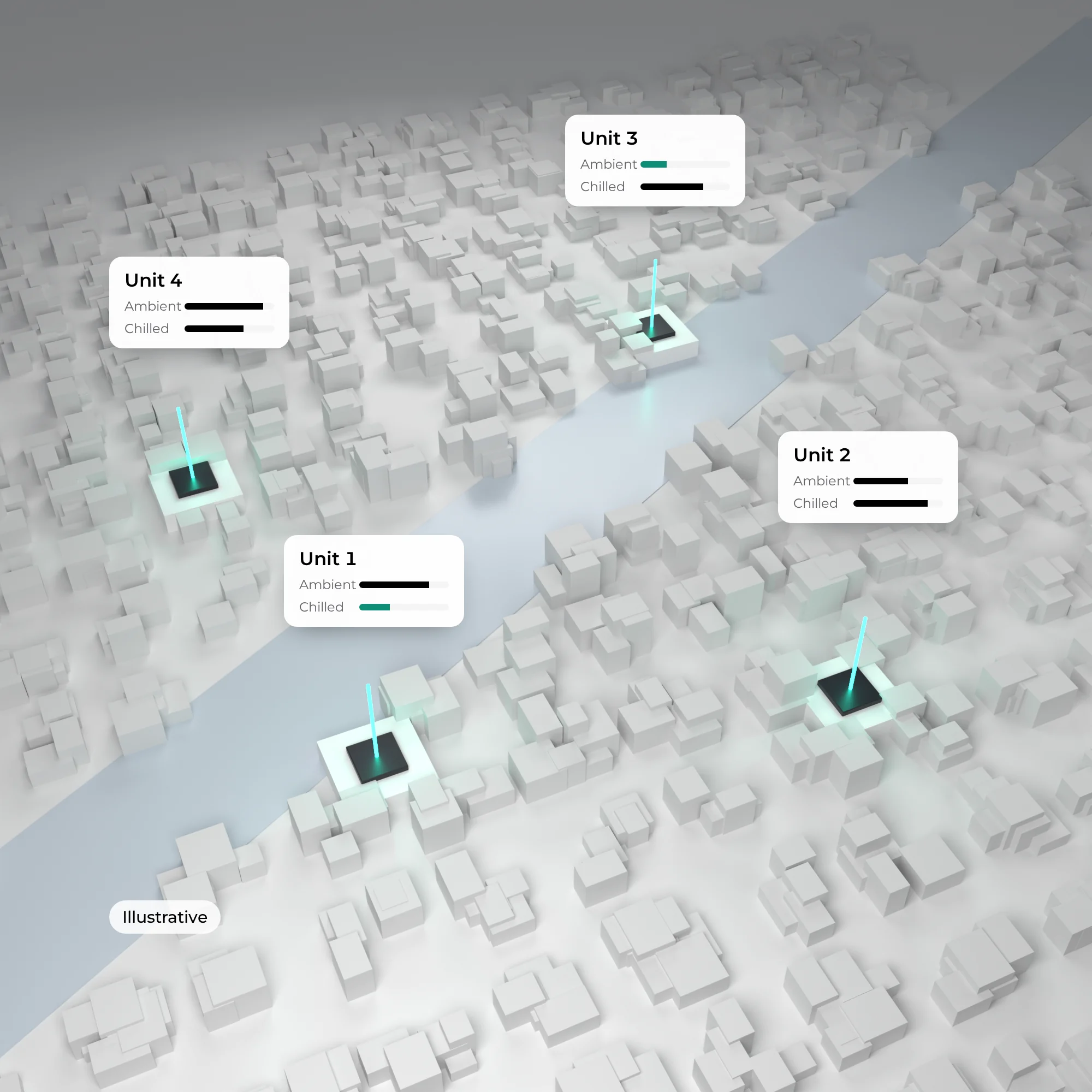
Totssy Brain and Totssy Connect. One in the unit, one across them.
Plans each order as it lands. The Brain compares sequences of tote visits against the stock really in the rack, reserves the exact pieces, and keeps the rack robot and the arm busy at once.
Takes orders in, reports back. Connect receives orders from your systems over one API and returns every line completed, partly filled or failed, with a reason when it is not complete.
Keeps working, in view. If the link to the cloud drops, a unit carries on picking. The admin portal and the operator's dashboard show each unit as a live 3D twin, as it moves.
The Brain runs each unit on a computer inside it, so a decision never waits on a connection. Connect joins the units to each other and to your systems.